k a t i e   z a f f r a n n
  • featured content
  • March8th

    I’ve been thinking a lot lately about this Zen proverb – quite the truism, as continues to be revealed to me.

    Though I like this phrasing of it the best, it has made its way mainstream in such cliches as “what doesn’t kill you only makes you stronger” (a bit testosterone-charged) or what I once saw on a greeting card: “a strong woman is like a teabag: you don’t know what she’s made of until she gets into hot water” (…gag). Or, as one of my acting teachers once said, “We never really get rid of our problems; we just become better friends with them.”

    Last week I was out to dinner with a good friend, a former stage manager who is married to an actor. She was telling me about her husband’s recent success booking a commercial because of his culinary skills (and the reek of onions as he practiced chopping, slicing & dicing for the audition). “How ironic,” she said, “that his survival job is what got him this breakthrough.”

    But I’m not sure I find it ironic at all. In a very real way, it is our challenges that define us and shape us into the people we will become — largely because we must change and grow in order to overcome them.

    Sometimes I wonder (wistfully) what it would be like to not be so highly intelligent, especially as an artist. I say this not as any sort of bragging right — there are many, many times when I don’t want to be analyzing things on six different levels at once; when thinking is not the best solution to the matter at hand; when I wish my brain came with an on/off switch, or at least a dimmer. Pretty much any time during the artistic process, in fact. There’s a reason I’ve never been terribly gifted at improv.

    And yet, my intelligence is a major part of what makes me who I am, rather than who I might wish I were… and it’s not an asset I feel like throwing away!

    Lately I seem to be riding a wave of what I hope will smooth out into a more integrated existence. I’m jaggedly emotional, continually surprised by outbursts of laughter and anger, crying to friends over beers, but I’m not entirely sure just why. I do know – on the gut level – why can’t there be two different words for intellectual knowing and intuitive knowing? – that the answer is not going to be found by thinking it through.

    So instead I am living it through. This obstacle IS my path, and I know not where it leads…

    Share and Enjoy:
    • email
    • Facebook
    • Google Bookmarks
    • del.icio.us
    • Digg
    • Reddit
    • StumbleUpon
    • LinkedIn
  • February16th

    On Easter Sunday 1967, Jim Thompson, an American businessman credited with revitalizing the Thai silk industry, mysteriously disappeared while taking a walk in the Cameron Highlands of Malaysia. To this day he has not been found.

    A Workshop Production
    Music by Mark T. Evans / Lyrics by Eric Kubo / Book by Zac Kline
    Directed by Blake Bradford with Musical Staging by Clare Cook

    February 18, 25, 28 at 8 PM; 19, 20, 26, 27 at 7 PM

    at the Wings Theatre, 154 Christopher St

    Tickets $20 / $15 students with ID, available here.

    Share and Enjoy:
    • email
    • Facebook
    • Google Bookmarks
    • del.icio.us
    • Digg
    • Reddit
    • StumbleUpon
    • LinkedIn
  • February9th

    supercilious

    Posted in: musings

    I’m on the train with Somerset Maugham again (on now to another of the nine novels, this time Of Human Bondage) when we chance to meet a new character who thinks of our hero as supercilious. (He couldn’t be more wrong, but then, such are the hazards of judging other people.) Anyway, this is one of those words I tend to soldier through each time I come across it, thinking I have enough of an idea of what it means that I can get by without picking up a dictionary. Context clues, anyone? But now that I can move my Kindle cursor right to it and have the definition just appear… well, an entire new vocabulary is at my disposal.

    Did you know that supercilious (which, by the way, is defined as “behaving or looking as though one thinks one is superior to others”) comes from the Latin word superciliosus (“haughty”), which is from supercilium — “EYEBROW” ?!

    I love stuff like this. Talk about human behavior. I think from now on I’ll just start referring to snobby people as eyebrow-y.

    Share and Enjoy:
    • email
    • Facebook
    • Google Bookmarks
    • del.icio.us
    • Digg
    • Reddit
    • StumbleUpon
    • LinkedIn
  • February5th

    Hot off the presses — video from last Sunday’s Second Avenue Songbook series featuring the songs of Tony Asaro and Rob Shapiro. Here I am singing Tony’s song “Half Empty Bed” from his musical-in-progress, GOING NOWHERE (with Vince Peterson on piano).

    YouTube Preview Image
    Share and Enjoy:
    • email
    • Facebook
    • Google Bookmarks
    • del.icio.us
    • Digg
    • Reddit
    • StumbleUpon
    • LinkedIn
  • February2nd

    The Works of Somerset Maugham: Nine Novels in One Volume (Kindle edition)

    Well, I got a Kindle for Christmas, and to the chagrin of my inner Luddite, I have been loving this thing on the subway. And 9 novels for $.99 – who can argue?

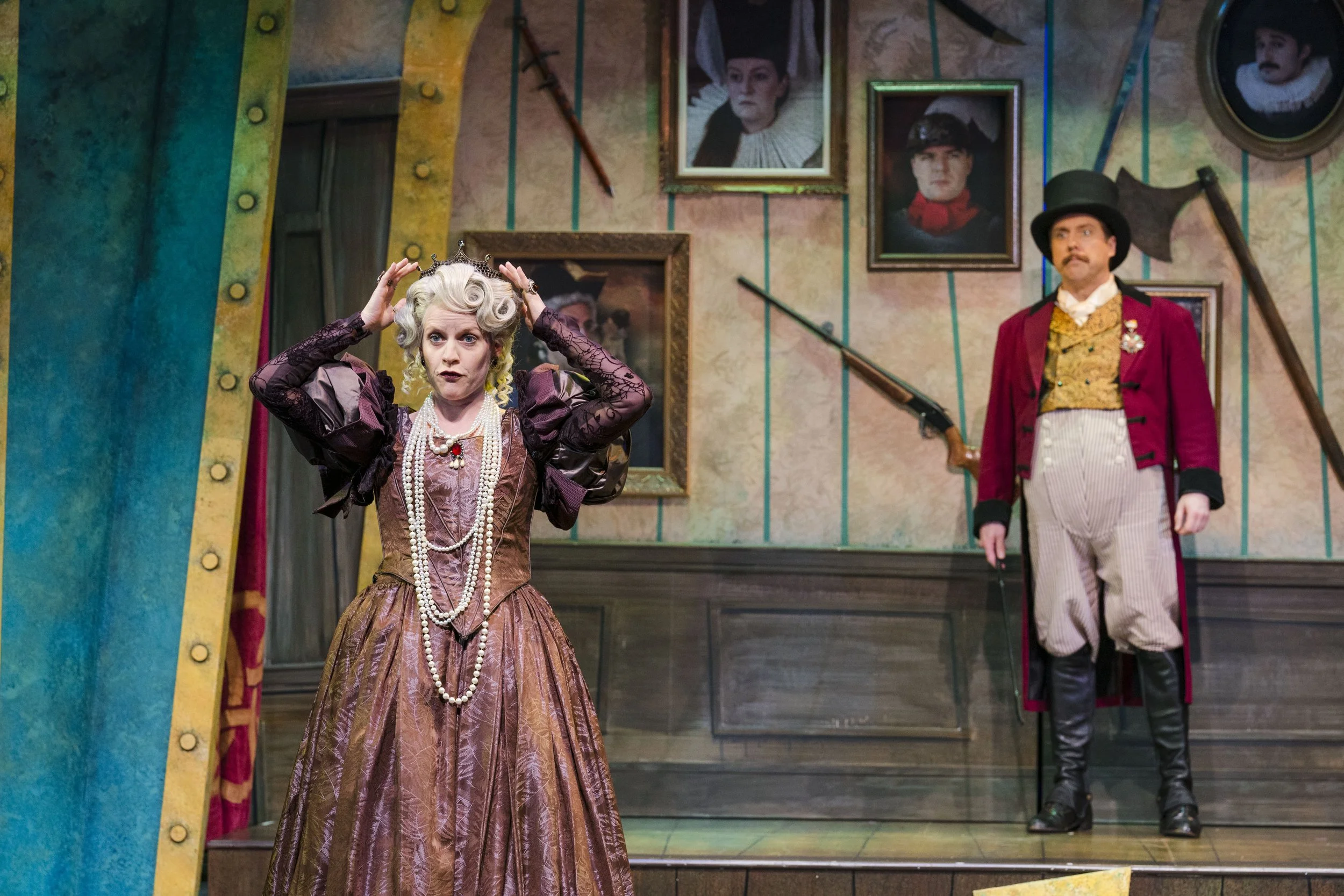
    Later this month I will appear in I Am Jim Thompson, a new musical with music by Mark T. Evans, lyrics by Eric Kubo and book by Zac Kline, directed by Blake Bradford. The show is based on the real Jim Thompson, an American soldier and spy who revitalized the Thai silk industry in the mid-20th century, before disappearing into the jungle in Malaysia. My character is Jim’s friend and companion in Thailand, a British expatriate based on his real friend Connie Mangskau. Jim and Connie, apparently, threw amazing parties – legendary parties – and almost every time I walk onstage it’s with a martini glass and a cigarette.

    Research is quite possibly one of my favorite parts of being an actor. When I was young I used to love reading historical fiction, and when I travel, especially to Europe — cities with centuries-old structures — or even cobblestone-filled downtown Manhattan — I find myself walking the streets and imagining another girl, in another time, whose feet touched these same stones. Where was she going? Was she alone – could she be? What was she wearing, what did she smell and hear and see, who had she left behind at home and what circumstances awaited her at her destination? Asking and answering these kinds of questions for a new character – especially one in another place and time – grounds me in a reality often quite different from contemporary New York.

    So I’m reading Somerset Maugham so that I can deliver a line about socializing with him in Bangkok. I decided to begin with The Moon and Sixpence, based on the life of Paul Gauguin (lots of artists riffing on other artists around these parts!). Through the novel’s protagonist (a writer), Maugham has his own take on the artist’s “research”:

    Until long habit has blunted the sensibility, there is something disconcerting to the writer in the instinct which causes him to take an interest in the singularities of human nature so absorbing that his moral sense is powerless against it. He recognises in himself an artistic satisfaction in the contemplation of evil which a little startles him; but sincerity forces him to confess that the disapproval he feels for certain actions is not nearly so strong as his curiosity in their reasons. The character of a scoundrel, logical and complete, has a fascination for his creator which is an outrage to law and order. I expect that Shakespeare devised Iago with a gusto which he never knew when, weaving moonbeams with his fancy, he imagined Desdemona. It may be that in his rogues the writer gratifies instincts deep-rooted in him, which the manners and customs of a civilised world have forced back to the mysterious recesses of his subconscious. In giving to the character of his invention flesh and bones he is giving life to that part of himself which finds no other means of expression. His satisfaction is a sense of liberation.
    The writer is more concerned to know than to judge.

    And then he has this to say — through the character of an art dealer in Paris who recognizes the Gauguin character’s genius when the rest of the world finds his paintings hideous:

    “Why should you think that beauty, which is the most precious thing in the world, lies like a stone on the beach for the careless passer-by to pick up idly? Beauty is something wonderful and strange that the artist fashions out of the chaos of the world in the torment of his soul. And when he has made it, it is not given to all to know it. To recognize it you must repeat the adventure of the artist. It is a melody that he sings to you, and to hear it again in your own heart you want knowledge and sensitiveness and imagination.”

    Do you hear the melody of beauty — have you been on the adventure of the artist?

    Share and Enjoy:
    • email
    • Facebook
    • Google Bookmarks
    • del.icio.us
    • Digg
    • Reddit
    • StumbleUpon
    • LinkedIn
  • January27th

    Almost as cliché as touting Shakespeare’s way with words is to say how clever Sondheim’s lyrics are, or how complex (but moving) his music.

    But, being entrenched in his work this week, I can’t avoid it: Sondheim really is genius. His songs are gifts: perfectly packaged, with taste and class, and with new surprises for the singer (and, one hopes, the listener) each time they are opened. As a text-lover, I relish working with his lyrics even before I go to the piano. Each bit of punctuation is carefully selected and has as specific a meaning as it does in Shakespeare, so that the thoughts are practically thought for you and by the time you’ve finished the song you’re not quite sure how you arrived at this new place, but it was entirely logical and right. At least, that’s how “On the Steps of the Palace” feels.

    And then what if you are
    What a Prince would envision?
    Although how can you know
    Who you are til you know
    What you want, which you don’t?
    So then which do you pick:
    Where you’re safe, out of sight,
    And yourself, but where everything’s wrong?
    Or where everything’s right
    And you know that you’ll never belong?

    There’s a lot that’s at stake,
    But you’ve stalled long enough
    ‘Cause you’re still standing stuck
    In the stuff on the steps…

    I could (and do) analyze this the way I would a Shakespearean monologue: look at the line endings (“know” twice in a row, why the word “envision”, wrong vs right); the alliteration (stake/stalled/still/standing/stuck/stuff/steps); the long run-on lines with no punctuation, and then what feels like a comma after every word. Tonight I’ve been pacing back and forth in my apartment, turning on each punctuation mark and clarifying the thought patterns for myself. The neighbors must think I’m crazy.

    This week I am rehearsing for next week’s benefit performance of Into the Woods, funded by a grant from the Sing for Hope Foundation. Though I’ve long wanted to work on Cinderella, and did the show in college (playing the old women: Cinderella’s Mother, Little Red’s Granny, and the Giant), my work is seriously cut out for me. (In fact, I really should be, you know, DOING it instead of writing about it.) I am facing the big monsters of Expectations (but it goes so perfectly in my head!) and learning to let loose while still underprepared – something perfectionists aren’t known for being the best at. But I tote my trusty kaleidoscope to rehearsal with me, and remind myself that I sing songs and tell stories for a living, and babies aren’t dying… and isn’t all this process stuff FUN?

    Share and Enjoy:
    • email
    • Facebook
    • Google Bookmarks
    • del.icio.us
    • Digg
    • Reddit
    • StumbleUpon
    • LinkedIn
  • January26th

    happiness

    Posted in: Inspiration

    Must link. Terry Teachout’s periodic “Almanac” postings of quotes and musings rarely fail to inspire… but this one really did it for me today:

    “Happiness is one of the hardest things to write about, and the difficulty of doing so makes me long to be a musician or a painter, for painters and musicians are at ease with the supreme emotion, which is not grief but joy abounding. To be able to make a joyful noise unto the Lord or a praise of colors and forms would seem to me to equate any man with gods or little children. Happiness annihilates time. We measure history by its catastrophes, we recall the weather by its storms, but the periods of peace and joy–who can describe them?”

    Hugh MacLennan, The Watch That Ends the Night

    About Last Night

    Share and Enjoy:
    • email
    • Facebook
    • Google Bookmarks
    • del.icio.us
    • Digg
    • Reddit
    • StumbleUpon
    • LinkedIn
  • January21st

    The Fabulous Lunts: A Biography of Alfred Lunt and Lynn Fontanne

    Studs Terkel has given way to a similar work that has been gathering dust on my shelf for awhile: a hefty biography of the Lunts.

    I should probably put this confession right out there: I have something of a Lunt-adoration complex. When Ten Chimneys (their Genesee Depot, WI home, not far from where I grew up) opened to the public for tours in 2003, I went for a visit. The docents told stories of Noel Coward relaxing in the pool and Katharine Hepburn driving up WI-83 (I picture her in a convertible with a scarf around her hair, big sunglasses, and a smile). They showed us Alfred’s kitchen, Lynn’s solitaire table, and the studio building where they drank a bottle’s worth of champagne toasts to Coward during one night of particularly intense air raids over London. I fell in love in a day, vowing to leave pencil marks on my walls when decorating (because one cannot see such marks on stage sets, from the audience); to hold theatrical retreats at Ten Chimneys to soak up the karma; and most importantly to marry an attractive and ridiculously talented young actor who shared my Lunt-transformation aspirations.

    Of course much of the allure for me is the urbane glamour of the stage combined with the rural farm life of Wisconsin. That was the Lunts. Spend the year on Broadway, in London or touring the country — and then relax all summer – cooking gourmet food from one’s own garden – in the Midwest? Yes, please!

    My obsessions and future plans aside, this biography has been a great read. Mr Brown does his best to discuss their craft, finesse and superb technical skill; and being a young artist myself I particularly enjoyed the chapters about their early years, their struggles and successes and dreaming big dreams over dinner from the deli downstairs.

    But I have been most struck by the account of their time during World War II. Having remained adamantly apolitical prior to 1940, during the war years that position completely reversed. They volunteered tirelessly at the American Theatre Wing’s Stage Door Canteen in New York, providing free food and entertainment to over 3,000 enlisted service members every night; made numerous donations and contributions, including weeks of box office grosses, to any number of war relief funds; gave speeches and radio addresses; ran a Pulitzer-prize-winning, strongly anti-war play on Broadway, across the country and internationally; and finally emigrated, in 1943, to London to perform there and at Allied bases on the continent, for the duration of the war.

    I will share this anecdote from when There Shall Be No Night toured to Canada (file it under Why We Do Theater, Reason #783):

    The Lunts were invited to visit with the speaker of the Canadian House of Commons, were given a reception by the lieutenant governor and, most rewarding of all, Premier MacKenzie King told them privately that the production of There Shall Be No Night marked a turning point in Canadian-American relations. The play had given him the courage to initiate a serious dialogue with Washington concerning the likelihood of war, he said. In Fontanne’s words, “He wanted to say exactly what he thought about how [the United States and Canada] could cooperate in the crisis. But he was using the guarded terms of diplomacy which means so little or so much according to what one wishes to make of them. When he saw There Shall Be No Night he decided to give up these phrases and come down to the statements that anybody could understand. He told us this himself.”

    Times have changed; the theater has changed; stage actors no longer enjoy the same fame or following they once did. But the artist’s impulse remains the same. The Lunts are an inspiration not only for the life they created for themselves, but for their unmatched dedication to their craft, their never-ending pursuit of excellence, and – most importantly – their unflagging service to their art and their fellow man.

    Share and Enjoy:
    • email
    • Facebook
    • Google Bookmarks
    • del.icio.us
    • Digg
    • Reddit
    • StumbleUpon
    • LinkedIn
  • January17th

    Two gigs still to come this first month of 2010:
    First off, I’m back with Little Grey Girlfriend this Wednesday night, January 20th, at Union Hall in Park Slope, Brooklyn. Only $5 cover gets you a FREE copy of Cells Planets! We’re on at 9:30 – come early for a game of BOCCE upstairs.

    Then on January 31st I will join a host of great singers in an evening premiering the works of Tony Asaro and Rob Shapiro, at the NYU Grad Musical Theatre Writing building on the Lower East Side. I will be premiering a song of Tony’s from one of his musicals-in-progress. Don’t miss it!

    Share and Enjoy:
    • email
    • Facebook
    • Google Bookmarks
    • del.icio.us
    • Digg
    • Reddit
    • StumbleUpon
    • LinkedIn
  • January14th

    This month I am eliminating the word “should” from my vocabulary. I have started to notice that things I should do rarely get done, while things I want to do, could do, might do, can do, or will do, generally… do.

    Like writing for this blog. I have about five drafts started of posts I should want to write, but just never quite get around to publishing.

    The thing is, most of the things I think I “should” do, especially when it comes to my career, are actually things I want to do! Like practice every day, write regularly, keep in touch with people in the industry. I genuinely enjoy doing all of this, but as soon as that nasty SH*&% creeps in, it turns into chores and procrastination and I can feel my energy dig in its proverbial heels. Wouldn’t you rather just make some popcorn and watch a little West Wing? it asks. I could show you some lovely things on YouTube, or perhaps you might like a little Facebook instead?

    No more! No more I say. I think I’d like to do something productive, that doesn’t come with procrastination remorse, instead.  (And then watch West Wing later.)

    Share and Enjoy:
    • email
    • Facebook
    • Google Bookmarks
    • del.icio.us
    • Digg
    • Reddit
    • StumbleUpon
    • LinkedIn